

Want a brighter smile but worried that whitening will leave your sensitive teeth aching? You’re not alone—tooth sensitivity is one of the most common reasons people hold off on whitening, but it doesn’t have to be a dealbreaker. With the right approach, even patients with sensitive teeth can achieve meaningful results. Professional teeth whitening performed or supervised by a dentist is often the safest starting point, because your dental team can tailor the treatment to your sensitivity level and take steps to minimize discomfort throughout the process.
Key Takeaways
- Sensitive teeth and teeth whitening can coexist—the key is choosing the right method and concentration for your individual needs.
- Whitening-related sensitivity is usually temporary and can be managed with desensitizing agents and lower-peroxide formulas.
- Dentist-supervised whitening allows for customization that over-the-counter products can’t offer.
- Patients with underlying causes of sensitivity—such as enamel erosion or gum recession—should address those issues before beginning any whitening treatment.
- Spacing out treatments and using desensitizing toothpaste before and after whitening can significantly reduce discomfort.
Why Do Sensitive Teeth React to Whitening in the First Place?
To understand why whitening sometimes causes discomfort, it helps to know a little about how sensitivity works. Tooth sensitivity occurs when the protective enamel layer is thin or compromised, allowing stimuli—heat, cold, pressure, or chemical agents—to reach the dentin and the nerve endings beneath it. Most whitening products use hydrogen peroxide or carbamide peroxide to lighten stains, and these agents can temporarily penetrate enamel and irritate those nerve endings.
This doesn’t mean whitening is off the table for sensitive teeth—it just means the approach matters. Higher peroxide concentrations applied too frequently are the most common cause of whitening-related discomfort. Products formulated at lower concentrations, used with proper spacing between sessions, are much more manageable for patients who are already prone to sensitivity.
It’s also worth identifying what’s behind your sensitivity before starting any whitening treatment. Enamel erosion, gum recession, cavities, or cracked teeth can all amplify the reaction. A dental exam to address those underlying issues first sets you up for a more comfortable and successful whitening experience.
Which Whitening Options Are Gentlest for Sensitive Teeth?
Not all whitening products are created equal when it comes to sensitivity. These options tend to be the most manageable for patients with sensitive teeth:
- Low-concentration take-home trays: custom-fitted trays provided by your dentist with a lower-peroxide gel allow for gradual whitening at a pace your teeth can tolerate
- Carbamide peroxide formulas: this whitening agent releases its bleaching effect more slowly than hydrogen peroxide, making it gentler overall and a common choice for sensitive patients
- Desensitizing whitening gels: some professional products contain potassium nitrate or fluoride alongside the whitening agent to calm nerve sensitivity during and after treatment
- Shorter application times: in-office treatments can be administered in shorter intervals with breaks between sessions, reducing the total peroxide exposure at any one time
- Whitening toothpaste: the most conservative option, these work by removing surface stains through mild abrasives or low levels of peroxide and are generally well-tolerated even by sensitive patients
Over-the-counter whitening kits offer convenience, but they come with a significant limitation for sensitive patients: one-size-fits-all concentrations and no clinical oversight. Without a professional evaluation, there’s no way to know whether your sensitivity stems from an existing issue that should be treated first, or whether the product you’ve chosen is appropriate for your enamel condition.
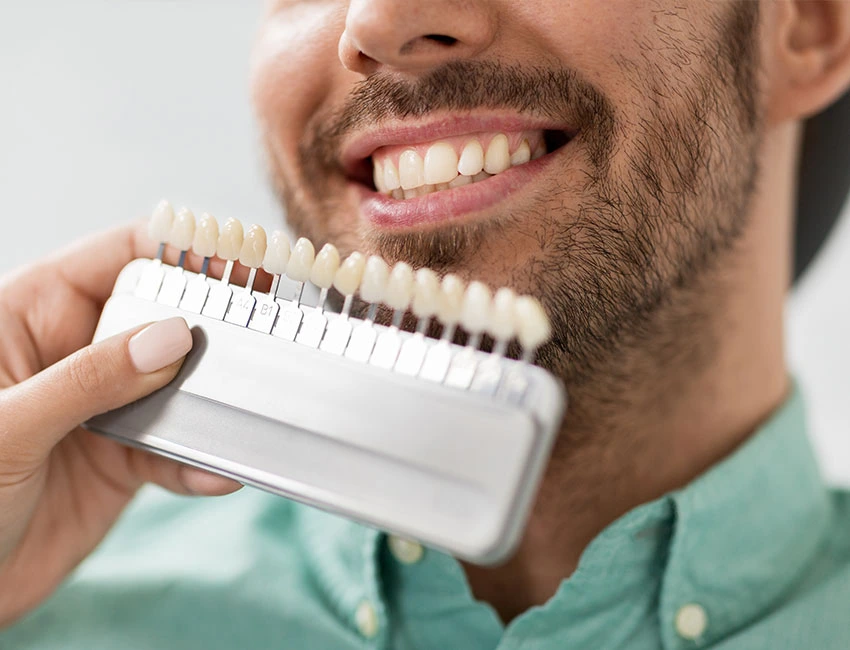
Dentist-supervised whitening—whether done in-office or through a custom take-home kit—offers something OTC products simply can’t: personalization. Your dentist evaluates your teeth and gums beforehand, selects the right concentration, and can provide desensitizing treatments alongside the whitening protocol. Custom trays also distribute the gel more evenly and prevent it from contacting the gums, which reduces irritation significantly.
Sensitive Teeth Shouldn’t Mean Settling for a Dull Smile
Having sensitive teeth doesn’t mean whitening is out of reach—it just means being thoughtful about how you go about it. With the right product, the right concentration, and the right support from your dental team, a noticeably brighter smile is absolutely achievable. Professional teeth whitening tailored to your needs is the most effective and comfortable path forward for patients who want results without the discomfort.
If you want to learn more about teeth whitening for sensitive teeth, visit our Teeth Whitening in West Hollywood page or schedule a consultation.